NSF backs new research centers with $90M, including human-robot collaboration hub
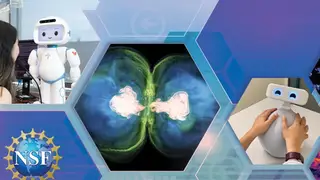
The U.S. National Science Foundation will invest $90 million over five years in three new Science and Technology Centers. One center, led by the University of Texas at Austin, will focus on human-robot co-adaptation. The centers aim to advance AI and robotics research and workforce development.
The new Center for Human and Robot Co-Adaptation at UT Austin will investigate how machines and people adjust to each other in everyday settings. Its work combines robotics, artificial intelligence, and human factors research to build robots that can learn from individuals, recognize preferences, and respond to shifting conditions in homes, clinics, and public venues. The center is one of three funded through the NSF's Science and Technology Centers program, which has operated since 1987 and supported large-scale, multi-institutional research projects.
The other two centers address turbulence physics at Michigan State University and genome engineering at Northwestern University. Each center receives $6 million annually for five years, with a possible five-year extension. The program emphasizes workforce development, giving students and early-career researchers hands-on experience in emerging fields while fostering partnerships among universities, industry, and government.
This investment could shape how robots enter daily life, particularly for older adults, patients, and workers in service industries. If the center succeeds in making assistive robots more responsive to individual needs, it may ease burdens on caregivers and support independent living. However, widespread adoption could also raise questions about privacy, job displacement, and trust in automated systems. The program's workforce component may help train a generation of researchers, potentially influencing how quickly these technologies reach real-world applications.