Factory liquid metal defect corrodes Asus laptop CPU, but re-pasting restores performance
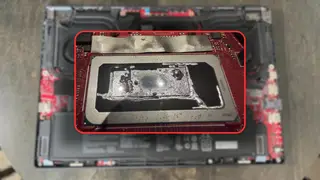
A Reddit user discovered that the liquid metal thermal interface material applied at the factory on their Asus Zephyrus M16 had corroded the CPU's heatsink and lid, nearly reaching the silicon. The faulty application caused overheating, throttling, and system crashes. Replacing the liquid metal with phase-change material PTM7950 tripled frame rates, lowered temperatures, and stopped the crashes.
The 2022 Zephyrus M16 relied on liquid metal as its thermal interface material, a choice Asus has applied across several mobile platforms. In this case, the conductive alloy had migrated beyond its intended cavity and chemically degraded both the copper heatsink and the processor's protective lid over roughly three years of light use. The corrosion was severe enough that the silicon itself was nearly exposed.
The owner's repair involved carefully consolidating the damaged liquid metal using cotton swabs and isopropyl alcohol, then lifting it away with painter's tape before applying PTM7950 phase-change material. The outcome was dramatic: frame rates roughly tripled, operating temperatures dropped, and the random shutdowns ceased entirely, suggesting the factory application had been compromising performance from the start.
This incident may raise broader questions about manufacturer reliance on liquid metal in consumer laptops, particularly for users who expect several years of trouble-free operation. Owners of similar machines could face premature hardware degradation or costly repairs outside warranty, while the repair process itself demands skill most users lack. It may also influence future thermal design choices, though the impact likely remains limited to enthusiasts and technically inclined buyers rather than the general laptop market.