Roman Space Telescope Launches After Budget Battles
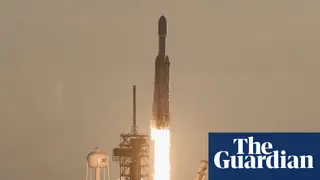
NASA's $4.3bn Nancy Grace Roman Space Telescope lifted off from Florida, heading to Lagrange point 2. The telescope, which survived proposed budget cuts, will search for exoplanets and study planetary formation. Its 300-megapixel camera offers a field of view 100 times larger than Hubble's.
The telescope is named for Nancy Grace Roman, NASA's first chief of astronomy, who died in 2018. Its development spanned nearly a decade, with the mission concept first conceived at the end of the last century. The spacecraft survived two separate rounds of proposed White House budget cuts before reaching the launchpad.
Roman will join Hubble and Webb at Lagrange point 2, roughly one million miles from Earth, though the telescopes will remain widely separated in that region. Its specialized coronagraph blocks starlight to enable detailed imaging of orbiting planets. NASA expects first imagery in early 2027 after months of calibration, with all data released publicly for professional and amateur analysis. The initial five-year mission could extend to ten years.
The Roman telescope's public data policy could democratize space research, allowing smaller institutions and citizen scientists to participate in discoveries previously limited to major agencies. Its wide-field surveys may accelerate understanding of dark matter, dark energy, and planetary formation, potentially reshaping textbooks and inspiring future generations of astronomers. However, the mission's $4.3bn cost and extended timeline mean taxpayers may weigh scientific returns against other pressing needs, and delays in first imagery could test public patience.