Rare earths: why the West must break its dependence on Chinese processing
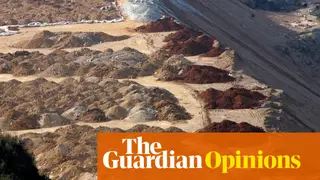
China's dominance in rare-earth mining and processing has become a geopolitical weapon, as demonstrated by its export curbs last year. The West is now seeking to diversify supply chains, but success depends on creating stable markets for these critical minerals. The Guardian argues that securing these supply chains is essential for renewable energy and defense technologies.
Rare earths comprise 17 metals that are relatively abundant in the Earth's crust but typically found in low concentrations, making extraction and processing expensive, technically demanding, and environmentally harmful. The industry's economics—high costs with thin profit margins—drove Western nations to outsource production to China after the US dominated the sector in the 1980s. Even today, US-mined rare earths reportedly flow to Asian markets because domestic demand remains insufficient to absorb them.
The global rare-earth market remains modest, valued at under $6 billion last year, yet its strategic importance far exceeds its size. China's 2010 export block to Japan first raised alarms, but meaningful diversification efforts only accelerated after Beijing's recent export curbs. Washington has responded with a $12 billion critical minerals reserve plan and a 54-partner coalition, while France hosts the largest processing facility outside China. Both the US and China are now courting suppliers in Brazil, South Africa, and Greenland, raising ecological concerns.
This story could reshape how Western governments approach industrial policy and supply-chain security. If diversification succeeds, it may reduce geopolitical leverage that China currently holds over renewable energy and defense sectors. However, the transition could carry environmental costs, as new mining operations in ecologically sensitive regions like Greenland and Brazil may face scrutiny. Consumers could ultimately see price fluctuations in electronics and electric vehicles as markets adjust to new supply routes, while smaller nations with rare-earth deposits may gain newfound geopolitical influence.