NASA's Roman Telescope Reaches Orbit After Years of Delays
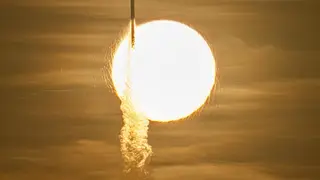
NASA successfully launched the Nancy Grace Roman Space Telescope after earlier funding issues and a name change. The observatory will travel one million miles to the Sun-Earth L2 point, where its 300-megapixel infrared camera will survey the sky 100 times faster than Hubble. Its instruments will map dark matter distribution and study dark energy's role in cosmic evolution, while also directly imaging exoplanets using a coronagraph.
The telescope's three-month voyage will carry it one million miles to the second Sun-Earth Lagrange point, a stable position beyond the Moon where it can observe without Earth's interference. Its 300-megapixel infrared camera captures a field of view 100 times wider than Hubble's, while the coronagraph system blocks stellar glare to reveal exoplanets directly, including smaller, older worlds orbiting close to their host stars.
Roman's 3D surveys will employ gravitational lensing measurements to chart dark matter's distribution across the cosmos. The same observations aim to trace how dark energy has shaped universal expansion over time. NASA's associate administrator described the mission as a "discovery machine" poised to address fundamental questions about cosmic history.
The Roman telescope's capabilities could significantly advance humanity's understanding of dark matter and dark energy, which together constitute most of the universe yet remain poorly understood. Its rapid sky surveys may accelerate exoplanet discovery, potentially identifying worlds that future instruments could examine for habitability. The mission's findings