US officials track dozens of missing citizens after Himalayan flash floods
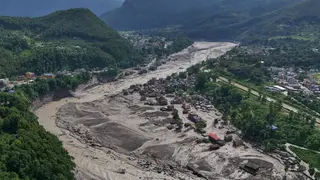
State Department spokesman Tommy Pigott said Sunday that roughly 85 Americans remain unaccounted for following flash flooding along the Nepal-Tibet border, with nine confirmed evacuated and no reported U.S. deaths. The disaster, triggered by a glacial collapse, has killed over 800 people and left thousands missing across both countries. The department has activated $3.6 million in emergency assistance and deployed a disaster response adviser to support affected communities.
The disaster unfolded Wednesday morning when the Bhotekoshi River surged at roughly 9 a.m. local time, following a glacial collapse detected near the China-Nepal border about 23 minutes earlier. The U.S. Geological Survey revised its initial earthquake assessment after analyzing long-period seismic waves, determining the event was a debris flow rather than a tectonic quake. Local authorities across both countries have confirmed more than 800 fatalities with thousands still unaccounted for.
The State Department has escalated its response from an initial $500,000 commitment to $3.6 million in emergency humanitarian aid, channeled through Catholic Relief Services. That funding covers emergency shelter, sanitation support, and up to three months of food for roughly 10,000 affected households. Embassy staff in Kathmandu and Beijing have been reinforced, and Pigott urged Americans in the region to enroll in the Smart Traveler Enrollment Program to facilitate contact and evacuation coordination.
This incident could strain U.S. diplomatic relations with both Nepal and China, as consular access and rescue coordination become critical priorities. Families of the missing Americans may face prolonged uncertainty, while the scale of displacement across the region could complicate recovery efforts for months. The glacial collapse mechanism also may heighten public concern about climate-related disasters in mountainous areas, potentially influencing future disaster preparedness funding and international aid protocols.