Mass funerals begin in Nepal as Himalayan flood fatalities exceed 900
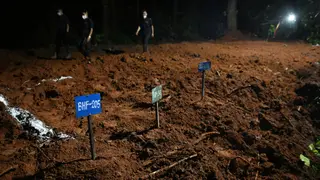
Nepal has started mass burials for victims of catastrophic flash floods along the Nepal-Tibet border, with the confirmed death toll now surpassing 900. Authorities in Nepal and China continue searching for over 4,000 missing people, including hundreds of hydropower workers. Rescue teams are drilling through debris to reach workers possibly trapped in a tunnel at a hydroelectric site.
Rescue crews in Nepal are focusing on a tunnel at the Trishuli 3A hydroelectric site, where a pipe has been inserted to reach workers believed trapped. Survivors described sudden, violent flooding that submerged turbine floors and forced some to climb to higher ground. The disaster began with a glacial collapse that triggered a massive rockfall, registering as a magnitude 5.2 seismic event, which then sent a wave of ice, rocks, and debris down river valleys. Overnight rain and rising waters temporarily halted excavation efforts before conditions improved.
The confirmed death toll across Nepal and Tibet now exceeds 900, with more than 4,000 still missing, including hundreds of hydropower workers and foreign nationals. Nepali authorities report 592 foreigners among the missing, while Chinese state media list over a hundred Nepalis missing on their side. Families continue to search overflowing morgues and rescue stations, while mass burials for unidentified victims have begun in Devghat.
This disaster could reshape infrastructure planning across the Himalayas, particularly for hydropower projects that employ thousands of foreign workers. The high number of missing foreigners may strain bilateral relations and prompt stricter safety regulations for multinational companies. Communities downstream face prolonged uncertainty over missing relatives, while the scale of unidentified burials could complicate grief and legal processes. The event may also accelerate international research on glacial collapse risks, influencing future development in fragile mountain ecosystems.