Nepal Flood Disaster Worsens: Over 900 Dead, Thousands Unaccounted
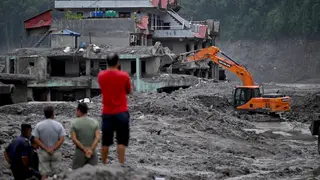
Nepal's disaster agency reported Monday that the death toll from last week's flooding has reached 903, with the number of missing nearly doubling to 4,247, including 592 foreign nationals. The flooding originated from a glacier collapse on the Nepal-Tibet border, and rescue teams are still struggling to reach affected communities. The State Department said about 85 Americans remain unaccounted for.
The disaster has now affected more than 90,000 people, according to the Nepal Red Cross, with rescue teams having pulled over 10,400 individuals to safety, including 277 foreign nationals. Morgues across the affected districts are overwhelmed, with officials in Chitwan reporting that more than half of the recovered bodies are unrecognizable. The flooding originated from a glacier collapse along the Nepal-Tibet border on Wednesday, and a landslide-dammed lake above the border checkpoint is now overflowing, though Chinese state media indicated a complete breach is considered unlikely.
China has separately confirmed 16 deaths and 546 missing persons in its Tibet region, including hundreds of foreigners, though the overlap between the Chinese and Nepali missing-person counts remains unclear. Heavy rainfall continues to push river levels higher, prompting fresh warnings for residents living near waterways. The U.S. State Department has confirmed that approximately 85 Americans remain unaccounted for among the 592 foreign nationals listed as missing.
This disaster could place significant strain on Nepal's already limited emergency infrastructure, potentially affecting regional stability and international relations as multiple nations track missing citizens. The high number of unaccounted foreign nationals may prompt increased diplomatic engagement and humanitarian aid commitments from affected countries. Long-term, the event could reshape discussions around glacier lake monitoring and cross-border disaster preparedness in the Himalayas, while the thousands of displaced families may face prolonged recovery challenges in an area with limited resources.