DNA analysis uncovers seven cryptic diamond frog species in Madagascar
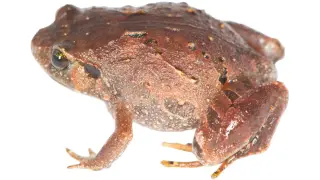
Researchers combined modern and century-old museum specimens with DNA analysis to identify seven new diamond frog species. The findings reveal hidden diversity and provide a stronger basis for conservation as Madagascar's forests vanish.
Diamond frogs spend most of their lives hidden beneath leaf litter, emerging rarely and looking remarkably similar across species despite being genetically distinct. Some resemble round rain frogs, while others are long-legged moss dwellers or sturdy ground-adapted forms. Several species carry vivid orange or black-and-white markings on their thighs that may serve to startle predators when the frogs move.
The identification process spanned twelve years and relied on museomics—sequencing DNA from century-old museum specimens—to link historical names with modern genetic lineages. Researchers cross-checked external features, skeletal structure, and vocalizations to confirm each species. This approach resolved taxonomic confusion that had persisted for decades and demonstrates how museum collections remain vital tools for modern biodiversity science.
This discovery could strengthen conservation planning in Madagascar, where rapid forest loss threatens undocumented species. By clarifying which diamond frog populations are distinct species, researchers may help prioritize habitat protection for the most vulnerable lineages. Local communities and conservation organizations could benefit from more accurate biodiversity assessments, while the findings may also encourage further use of museum collections in species discovery worldwide.