Discovery of 1992 QB1 expanded solar system's known boundaries
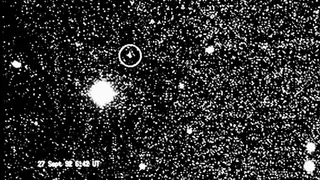
On August 30, 1992, astronomers detected the first Kuiper Belt object, designated 1992 QB1, orbiting beyond Pluto. This finding revealed a vast region of icy bodies beyond Neptune. Since then, thousands of such objects have been confirmed in what is now known as the Kuiper Belt.
The object, roughly 100 miles wide, was detected using new digital imaging techniques that could capture faint signals beyond Neptune. Its discovery confirmed a theorized region of icy bodies, later named for astronomer Gerard Kuiper. That region spans from about 30 AU to 1,000 AU from the sun, making it one of the solar system’s largest structures. Subsequent finds included Eris, larger than Pluto, which helped prompt Pluto’s reclassification as a dwarf planet in 2006. Later, NASA’s New Horizons spacecraft visited Pluto in 2015 and flew past another Kuiper Belt object, Arrokoth, in 2019.
This discovery could reshape public understanding of the solar system’s scale and composition, moving beyond the familiar nine-planet model. It may also influence educational curricula and inspire interest in planetary science, as thousands of icy worlds now represent potential targets for future missions. The eventual reclassification of Pluto demonstrates how new evidence can challenge established categories, potentially affecting how society views scientific progress and the definition of a planet.