Supreme Court Allows Trump's $600M White House Ballroom to Proceed; Chief Justice Dissents
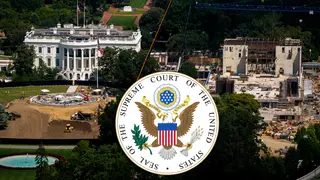
The Supreme Court voted 5-4 to permit continued construction of President Trump's ballroom at the White House, despite Chief Justice John Roberts' dissent that the project is likely unlawful. Roberts argued the ruling undermines Congress's authority over federal property and the power of the purse. The venue's cost has surpassed $600 million.
The decision marks a rare public split between Chief Justice Roberts and the Court’s conservative majority on a matter involving executive authority over federal landmarks. Roberts’ dissent frames the ballroom not merely as a construction project but as a constitutional flashpoint, echoing past disputes over presidential use of federal property. The $600 million price tag—still climbing—has drawn scrutiny from budget watchdogs, though the Court’s ruling effectively shields the project from immediate legal challenge. The case’s unusual speed to the high court suggests urgency from both sides, with the White House arguing operational necessity and opponents citing statutory overreach.
This ruling could set a precedent for how courts weigh executive actions on federal property against congressional oversight, potentially emboldening future presidents to bypass legislative approval for pet projects. Taxpayers and government accountability groups may see this as a signal that fiscal limits on presidential amenities are weakly enforced, while supporters may view it as a necessary affirmation of executive discretion. The dissent’s language could fuel legislative efforts to clarify property laws, though the immediate impact is likely limited to legal scholars and political commentators debating the balance of powers.