Investor backs wind-powered autonomous aircraft startup for year-long flights
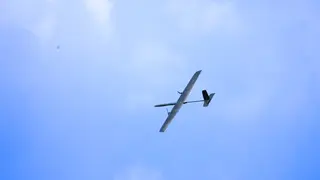
Alteon, a Bengaluru startup founded by 20-year-old Samay Sanghvi, has raised $2.5 million in pre-seed funding led by Lachy Groom with Together Fund participating. The company is developing small autonomous aircraft that use dynamic soaring—a technique inspired by albatrosses—to extract energy from ocean winds and stay airborne for extended periods. While the aircraft have not yet achieved sustained energy-neutral flight, a recent test over the Bay of Bengal demonstrated autonomous operation near the water's surface.
Alteon's aircraft design draws on dynamic soaring, a flight strategy observed in albatrosses that repeatedly transition between air layers moving at different speeds to gain energy without flapping. The startup's current prototype has a roughly three-meter wingspan and is intended to operate close to the ocean surface, where wind shear is strongest. The company's recent Bay of Bengal test involved the aircraft completing seven autonomous loops at speeds exceeding 62 miles per hour while maintaining altitude within one meter of the water.
The startup's founder, Samay Sanghvi, began pursuing the project in 2023 immediately after finishing high school, developing his skills by building and crashing radio-controlled model aircraft before progressing to early prototypes. The company's next technical milestone is achieving what it calls "energy-neutral dynamic soaring," where the aircraft could fly continuously with propulsion off. External experts note that while the physics is established, real-world turbulence, waves, and changing conditions present significant hurdles that may only surface during extended flight testing.
If Alteon succeeds, persistent autonomous aircraft could transform maritime surveillance, giving coastal governments continuous, low-cost visibility into shipping activity, illegal fishing, or environmental changes in their waters. This may reduce reliance on crewed patrol flights and satellites, potentially lowering monitoring costs while expanding coverage. However, extended autonomous operations also raise questions about privacy, airspace management, and the environmental impact of long-duration flights. The technology's viability remains unproven, and its societal effects will depend heavily on how regulators and operators choose to deploy such persistent observation capabilities.