EU's Potential Ban on ASML Exports Offers a Way to Halt AI's Dangerous Momentum
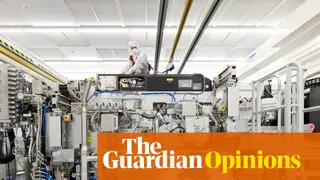
The AI industry's rapid expansion is linked to soaring carbon emissions and other existential risks, according to a new opinion piece. The author points out that even tech insiders like Bill Gates support a global slowdown. It proposes that the European Union could impose an export ban on ASML's advanced chip-making equipment to compel a halt.
ASML's extreme ultraviolet lithography machines are considered a critical bottleneck in global semiconductor production, with each unit costing roughly $400 million. The technology focuses light to a 13.5-nanometre wavelength to etch patterns onto silicon wafers, a process essential for manufacturing the most advanced chips used in AI datacentres. Without these machines, chipmakers like Taiwan's TSMC cannot build the fabrication facilities underpinning the industry's expansion, including its planned $265bn investment in future fabs and an estimated $7tn in datacentre construction.
The opinion piece draws parallels between the AI race and nuclear weapons proliferation, arguing that individual actors are incentivised to continue despite shared risks. It notes that calls for restraint have come from across the political spectrum, including Bill Gates and Bernie Sanders, and that industry self-regulation has proven insufficient, making external intervention necessary.
If the EU pursued such an export ban, it could create significant economic ripple effects across the global technology sector, potentially slowing datacentre construction and affecting companies reliant on advanced chips. Governments and corporations with heavy AI investments may face financial disruption, while workers in semiconductor supply chains could see job impacts. However, the measure could also provide breathing room for policymakers to develop safety frameworks, potentially reducing environmental and societal risks associated with unchecked AI expansion.