Methane reductions essential to meet Paris climate goals, study finds
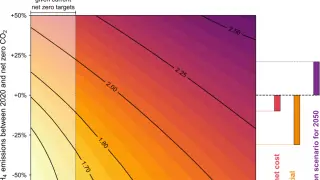
A new analysis argues that focusing solely on carbon dioxide targets obscures the distinct role of methane, a potent but short-lived greenhouse gas. Even with the most ambitious national net-zero pledges, failing to cut methane emissions would push peak warming above 1.85°C. The authors recommend decoupling methane and CO2 reduction strategies to ensure warming stays well below 2°C.
Methane traps heat far more efficiently than carbon dioxide but degrades in the atmosphere within decades, making it a prime target for near-term temperature relief. The study's authors argue that standard climate metrics, which convert all greenhouse gases into CO2-equivalent figures, obscure methane's unique behavior. Depending on which conversion metric is used—20-year, 100-year, or the newer GWP*—methane cuts can appear either urgent or nearly unnecessary.
The researchers propose separating methane and CO2 reduction strategies entirely. Their modeling shows that even with the most ambitious national net-zero pledges, failing to address methane would push peak warming beyond 1.85°C. Methane sources include agriculture, fossil fuel extraction, and waste management, each requiring distinct policy approaches rather than being lumped into broad emissions targets.
This study could reshape how governments structure climate pledges, potentially pushing methane-specific targets alongside existing CO2 commitments. Industries such as agriculture, oil and gas, and waste management may face new regulatory pressure, while policymakers could gain a clearer framework for prioritizing short-term actions. The findings may also influence public perception of climate progress, as nations claiming net-zero status might still fall short on warming limits without explicit methane reductions.