Fossil Auctions Reach Record Prices, Worrying Scientists
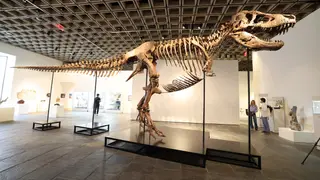
A Tyrannosaurus rex skeleton named Gus sold for $50.1 million, setting a new record for dinosaur fossils. Prices have soared since the 1990s, when skeletons rarely exceeded $1 million. This trend raises concerns among paleontologists about access to important specimens.
EXPANDED:
The commercial market for dinosaur fossils has transformed dramatically in roughly three decades. When Sue the T. rex sold for $8.3 million in 1997, it was considered a landmark; today that figure seems modest against recent results. The specimens attracting the highest bids tend to be exceptionally complete, like Gus, whose 183 bones represent up to 80 percent of the animal's total bone mass.
The identity of buyers remains opaque, though auction house representatives indicate wealthy individuals outside the scientific community dominate the market. Some purchased specimens have vanished from public view entirely, as with Stan the T. rex, which resurfaced years