Army Secretary Dan Driscoll resigns after 18 months, leaving Pentagon leadership gaps
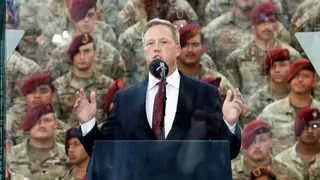
Army Secretary Dan Driscoll has resigned after 18 months in the role, a departure confirmed by the White House. His exit adds to a wave of senior military leadership changes, prompting lawmakers to warn of a 'rudderless' Pentagon. Both Republicans and Democrats praised Driscoll's service, but expressed concern about the current leadership culture.
Driscoll's resignation marks the latest in a series of high-level military departures during the current administration. Prior to his exit, Gen. Randy George was removed as the Army's top uniformed officer in April, and Gen. Christopher Donahue, commander of Army forces in Europe and Africa, stepped down unexpectedly in June. A Europe-based Army unit's drone development program, which Driscoll had championed, was also discontinued under new leadership.
The outgoing secretary brought a distinctive background to the role, including service in the Iraq War, experience as a tech investor, and a prior position as an adviser to Vice President JD Vance, whom he met at Yale Law School. Beyond his administrative duties, Driscoll served as a key negotiator in efforts to end the Russia-Ukraine war and pushed to streamline military contracting for rapid drone and counter-drone development.
This leadership churn could undermine military readiness and morale at a time when hundreds of thousands of soldiers are deployed globally, including in combat zones. The departure of experienced leaders may slow critical modernization efforts, particularly in drone warfare, and could erode congressional trust in Pentagon decision-making. A perceived culture prioritizing loyalty over competence may discourage qualified candidates from seeking senior military roles, potentially affecting national security preparedness and the military's ability to adapt to evolving threats.