Could the universe be a cosmic computer simulation? An astronomer weighs the evidence
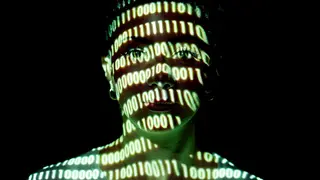
The article examines the hypothesis that our reality might be a virtual simulation, focusing on whether the universe's mathematical underpinnings could make that possible. It references the standard model of particle physics and experiments at CERN as examples of how mathematics predicts physical phenomena. The author, an astronomer, considers whether such a simulation could be tested or is inherently beyond scientific inquiry.
The article centers on a question posed by the author's child: whether reality could be a simulated construct. Heymans frames the inquiry around mathematics, noting that computers operate exclusively in that language, making the universe's mathematical nature a prerequisite for any simulation hypothesis. She cites the standard model of particle physics, developed in the 1970s, as a single algebraic equation predicting subatomic particle properties and interactions.
Experimental validation came through CERN's 27-kilometre particle accelerator, where proton collisions confirmed theoretical predictions, including the Higgs boson discovery. However, the author acknowledges gaps: neutrinos inexplicably change flavor during their eight-minute journey from the sun, and the standard model fails to account for dark matter, dark energy, or reconcile gravity with quantum mechanics—limitations that complicate any claim of a fully computable reality.
This inquiry could reshape public perception of scientific certainty, as the simulation hypothesis touches fundamental questions about existence that resonate beyond physics. Students and educators may find the mathematical framing accessible, potentially sparking interest in particle physics and cosmology. However, the untestable nature of the hypothesis means it may remain philosophical rather than empirical, which could either inspire curiosity or fuel unfounded speculation about reality's nature.