Waymo challenges Tesla's sensor strategy before Cybercab debut
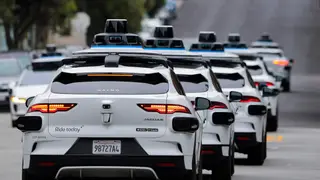
Waymo published a blog post arguing that fully autonomous driving requires multiple sensor types, not just cameras, and that pure end-to-end AI systems are unsafe. This comes a week before Tesla's expected Cybercab launch. Waymo also announced three new markets, expanding its robotaxi service.
Waymo's fleet currently numbers roughly 4,000 robotaxis operating across 14 U.S. cities, generating about 500,000 paid trips each week. The company's vehicles rely on a layered sensor suite combining cameras, lidar, and radar, a design choice it says is validated by more than 200 million miles of real-world driving.
Tesla, by contrast, has committed exclusively to camera-based vision paired with neural networks, dismissing lidar as unnecessary. Its upcoming Cybercab, a two-seater without steering wheel or pedals, is slated for production of over 125,000 units annually. Tesla has already begun testing its robotaxi network in Texas and Florida using modified Model Y vehicles, though Musk's earlier promise of one million robotaxis by 2020 remains unfulfilled.
This rivalry could reshape urban transportation and mobility access. If Tesla's camera-only approach proves scalable, it may dramatically lower robotaxi costs and accelerate adoption, potentially affecting jobs in driving industries and altering city traffic patterns. Waymo's multi-sensor strategy, while more expensive, may offer greater safety redundancy. Consumers could benefit from competitive pricing, but regulatory frameworks and public trust in autonomous systems will likely determine how quickly either company's vision reaches widespread use.