Seven overlooked science stories from August, from black hole stars to plastic cookies
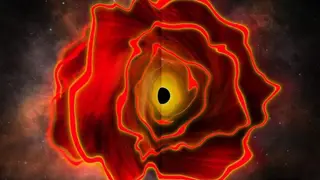
A monthly roundup highlights seven notable science stories, including the discovery of a 'black hole star' that produces energy comparable to an active black hole. Other stories cover microbes that can break down plastic into edible cookies, and a connection between whale calls and Einstein's special relativity. The list also includes avocado tree flowers that switch sex during the day.
The black hole star designation stems from observations of an object that emits energy roughly 100 billion times brighter than a typical star, yet displays a spectrum containing only hydrogen and helium. Computer simulations suggested a central black hole of about 100 solar masses encased in a hydrogen cocoon roughly the size of our solar system could account for the unusual "Balmer break" signature. Two additional candidates have since been identified.
The plastic-to-cookie research targets PET, the material in beverage bottles, proposing a closed-loop food system for long-duration space missions. The work was presented at an American Chemical Society meeting in Chicago, reflecting growing interest in biologically mediated recycling for extreme environments.
These discoveries could reshape how scientists approach two distinct challenges. The black hole star findings may offer a missing link in understanding supermassive black hole formation, potentially influencing future cosmological research priorities. The plastic-to-food technology could eventually provide practical solutions for waste management and nutrition in space exploration, though terrestrial applications remain speculative. Whale call research touching on relativity may deepen public appreciation for physics concepts, while avocado flower findings could inform agricultural practices. Each story represents incremental progress with modest but real implications for their respective fields.