Entrepreneurs Propose Low-Cost Interstellar Probe to Investigate Fermi Paradox
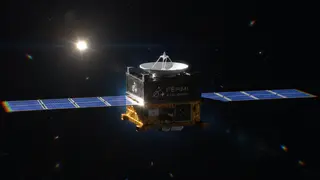
A private group led by Philip Johnston announced the Fermi Explorer mission to send a small spacecraft to Alpha Centauri within 80,000 years. The $15 million project aims to test the Fermi paradox by demonstrating interstellar transit is possible. Johnston believes this could address two potential 'filters' preventing civilizations from spreading.
The mission's technical approach relies on solar-electric propulsion using xenon gas, with the spacecraft executing retrograde arcs near the Sun over more than a decade to build velocity before departing for Alpha Centauri. The trajectory design emerged from an AI-generated feasibility assessment produced by Wissner-Gross's firm, which returned an 81-page technical analysis proposing the novel mission profile.
Johnston's background includes co-founding Starcloud, an orbital data center company valued at $2.3 billion. The Fermi Explorer team deliberately avoided seeking NASA funding or developing new propulsion technologies, instead aiming for a minimal viable mission using proven components. The project targets a 2029 launch aboard a rideshare mission, with the probe carrying a 1 kg scientific payload.
This mission could reframe public discourse around interstellar exploration by demonstrating that deep-space transit is achievable with modest resources rather than billion-dollar government programs. The 80,000-year timeline means no living person would witness results, which may limit sustained public engagement. However, the low cost could inspire other private efforts and shift conversations about humanity's long-term cosmic ambitions, potentially influencing how future