Zoox Unveils Its System-Level Safety Approach for Autonomous Robotaxis
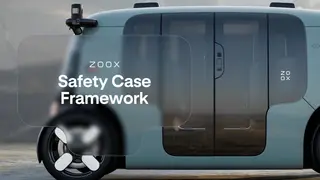
Zoox's safety case framework evaluates how hardware, software, and operations interact to ensure its robotaxis are significantly safer than human drivers within a defined operational design domain. The company uses a system safety process that integrates hazard analysis methods like STPA, FMEA, FTA, and HARA to guide architectural decisions such as redundancy and fault monitoring. This vertical integration—designing, manufacturing, and operating its own fleet—allows continuous safety optimization from early engineering through public road use.
Zoox’s safety case is built around a defined operational design domain, with a stated goal of outperforming human drivers. The company applies multiple hazard analysis methods—including STPA, FMEA, FTA, and HARA—to shape system architecture, particularly redundancy and fault monitoring. These analyses feed into safety requirements and test scenarios, which are then validated across hardware, software, and operations.
A quantitative risk framework aggregates three domains: autonomy behavior, robot platform, and operational safety. Before any safety-relevant change, Zoox updates its safety case and checks that the combined risk—measured as potential collision, injury, and fatality events per mile—meets targets. Real-world operational data loops back into engineering, enabling continuous improvement through vertical integration.
This framework could influence how regulators and competitors define autonomous vehicle safety, shifting focus from component reliability to whole-system interaction. If Zoox’s metrics gain acceptance, they may set a benchmark for proving robotaxi safety claims, affecting public trust and insurance models. However, the reliance on internal validation and defined ODD limits means real-world performance outside those conditions remains uncertain, potentially shaping deployment timelines and urban policy debates.