EU summons Russian envoys over Leipzig airport drone incident
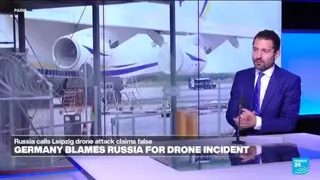
The European Union and several member states have summoned Russian embassy officials following an attempted drone attack at Leipzig/Halle Airport last month. Germany has concluded Russia was responsible and ordered the closure of a Russian consulate and cultural center in Berlin. Analysts examine why Leipzig was targeted and what measures the EU and Germany can take.
Germany's formal accusation against Russia stems from an attempted drone strike on Leipzig/Halle Airport last month, prompting Berlin to close a Russian consulate and the Russian cultural center in the capital. The European Union and several member states have now summoned Russian embassy officials, signaling coordinated diplomatic pressure across the bloc. France 24's analysis highlights uncertainty over why Leipzig was specifically chosen, though the airport serves as a major freight and passenger hub in eastern Germany.
The incident coincides with Ukrainian President Zelensky's warning that Russian skies are unsafe for civilian airlines, suggesting a broader pattern of threats to aviation infrastructure. Germany has also paired its diplomatic measures with sanctions, reflecting a dual-track response of public attribution and punitive action.
This episode could heighten public anxiety about critical infrastructure vulnerability, particularly among travelers and airport workers across Europe. German residents may see increased security around diplomatic sites, while the cultural center closure could strain everyday ties between ordinary Russians and Germans. The incident may also push EU member states to coordinate drone-defense strategies and infrastructure-protection standards, potentially affecting aviation policy and public confidence in cross-border travel during an already tense geopolitical period.