Russia's Rassvet satellite constellation shows early signs of trouble
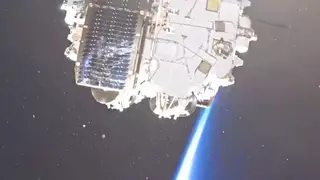
An assessment by the Institute for the Study of War indicates that at least three of the first 32 Rassvet satellites likely failed outright, with several others not reaching their intended orbital altitude. The satellites, launched in March and July, have only climbed to about 500 kilometers, far short of the planned 800-kilometer operational orbit. One satellite reentered the atmosphere in June, and others have stopped maneuvering, suggesting further problems.
The Rassvet constellation, operated by Bureau 1440, represents Russia's push to establish a domestic broadband satellite network comparable to Western systems. The program's target of roughly 300 spacecraft by late 2027 and 924 by 2035 underscores the scale of the ambition, yet the current deployment has fallen well short of operational parameters.
Historical comparisons offer perspective. SpaceX's earliest Starlink prototypes experienced failure rates around 13 percent over time, while later generations improved dramatically to near-negligible levels. Similarly, the US Space Development Agency's first operational satellites encountered propulsion and thermal issues that delayed their orbital raising, suggesting early-generation technical difficulties are common across national programs.
The Rassvet program's difficulties could delay Russia's military and civilian communications capabilities, potentially affecting battlefield coordination and remote-area connectivity. If the constellation fails to mature, Russian users may remain dependent on foreign or terrestrial infrastructure. However, early failures in satellite programs are common, and the program may still recover