Ten-Sided Atmospheric Anomaly Spotted at Saturn's South Pole
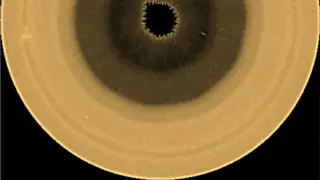
Astronomers have detected a previously unseen ten-sided wave encircling Saturn's southern polar region, a structure that appears to have formed only recently. The phenomenon, described in a new study, has no direct analog on Earth and its origin remains unclear, though researchers suspect it may stem from jet-stream instability or atmospheric disturbances at depth. Hubble Space Telescope images from 2023 show the wave gradually taking shape, becoming fully defined by late 2025.
The newly documented decagon represents only the second polygonal atmospheric structure observed on Saturn, following the hexagonal pattern at the north pole detected decades earlier. Unlike its northern counterpart, this southern feature appears to be a recent development, absent from archival imagery captured by both Hubble and the Cassini spacecraft.
Researchers note the wave's edges appear irregular in recent observations, suggesting it remains unstable and possibly still evolving. The phenomenon's emergence coincides with seasonal changes in Saturn's southern hemisphere, and scientists anticipate it may strengthen as solar heating peaks around 2032. The study appears in Science Advances, with lead author Agustin Sanchez-Lavega of Spain's Bilbao School of Engineering.
This discovery could reshape how planetary scientists understand atmospheric dynamics on gas giants, potentially informing models of weather systems applicable to exoplanet research. The unexplained asymmetry between Saturn's six-sided north and ten-sided south poles may prompt renewed funding for long-term planetary observation programs. Public interest in such anomalies could also bolster support for continued Hubble operations and future missions, as the phenomenon's evolution over coming years offers a rare opportunity to witness large-scale atmospheric change in real time.