Beijing's Egypt diplomacy aims to position China as regional stabilizer
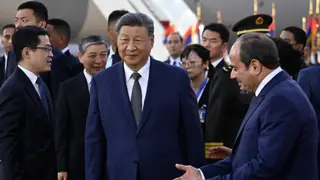
Chinese President Xi Jinping visited Egypt this week, marking his first trip to the country in a decade and his first regional visit since 2022. He sought to cast China as a stabilizing force in the Middle East, contrasting with the United States' military entanglements. The leaders also marked 70 years of diplomatic ties, with Egypt reaffirming support for China's stance on Taiwan and its membership in the BRICS bloc.
Xi's Cairo stopover follows a pattern of Chinese diplomatic engagement across the Middle East, including brokering the 2023 Iran-Saudi rapprochement. Beijing has positioned itself as a neutral mediator, contrasting with Washington's military footprint in the region, which includes the recent six-month conflict with Iran. Egypt's strategic pivot includes joining the BRICS bloc in 2023 and signing Belt and Road agreements, deepening economic integration with China.
Chinese investment in Egypt exceeds $10 billion, funding infrastructure like an industrial hub east of Cairo and an electric rail line in the Nile Delta. Bilateral trade reached roughly $20 billion annually, surpassing the $15.7 billion in U.S.-Egypt trade. Egypt's leadership views this relationship as a hedge, diversifying partnerships beyond its traditional alignment with Washington while maintaining ties with American officials.
This visit could reshape regional dynamics by giving Middle Eastern nations additional leverage in their dealings with Washington. Egypt's balancing act may influence how other U.S. allies in the region approach their own partnerships, potentially accelerating a broader shift toward multi-alignment. The economic stakes are significant, as increased Chinese investment could redirect infrastructure and trade flows, while the diplomatic symbolism may gradually erode the perception of American primacy in the region.