Hammonds' Journey from Walk-On to Starting Safety at Oklahoma State
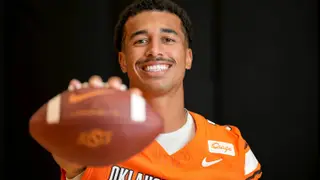
Quinton Hammonds, a walk-on at North Texas, earned a starting safety role at Oklahoma State after impressing coaches with his special teams play as a freshman. He recorded 52 tackles and an interception in his first season, then followed with 53 tackles, five tackles for loss, and a sack as a full-time starter in 2025. His connection to Oklahoma State's special teams coach Drew Svoboda, who played with Hammonds' father at Stephen F. Austin, helped open the door.
Hammonds arrived at Allen High School as a receiver, not a defensive back, and his senior season featured 700 all-purpose yards before he transitioned to the defensive side of the ball. His freshman campaign at North Texas included five starts across 13 games, with two separate 10-tackle performances that marked the first time a UNT true freshman had achieved that feat since 2000. He also earned Bronko Nagurski National Defensive Player of the Week honors after a two-interception outing against Navy.
The coaching connection runs deep: Hammonds' father, Patrick House, played alongside Oklahoma State special teams coordinator Drew Svoboda at Stephen F. Austin during a period when that program was nationally ranked in FCS. That relationship initially opened the door at North Texas, where Svoboda served on Eric Morris' first staff in 2023. Hammonds has since added quality weight this offseason, and the arrival of Liberty transfer Christian Bodnar has allowed him to shift from nickel to his more natural free safety position.
This story could resonate with overlooked athletes who lack scholarship offers, illustrating that walk-on paths still lead to meaningful playing time at the Power Four level. It may also reinforce how coaching relationships and family connections shape recruiting pipelines, potentially influencing how young players and their families evaluate program fit. For Oklahoma State fans, it signals that the coaching staff values versatility and special teams contributions, which could affect roster-building expectations and how future walk-ons are perceived within the program.