Marine mammal gills and jug emptying puzzles posed by readers
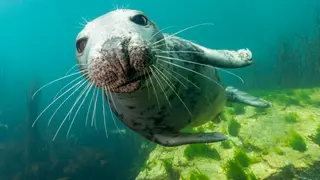
The weekly Last Word column poses two new questions: why marine mammals that returned to the sea haven't evolved gills, and the most efficient method to pour water from a full jug. Readers are invited to submit scientific answers.
The Last Word column has long served as a forum where New Scientist readers trade scientific explanations for everyday curiosities, from household physics to evolutionary biology. This installment pairs two seemingly unrelated puzzles: one probing the evolutionary constraints on marine mammals like whales and dolphins, which descended from land-dwelling ancestors yet never regained gills, and another exploring the practical fluid dynamics of emptying a jug efficiently.
The column maintains strict submission guidelines, requiring concise, scientifically framed questions about everyday phenomena, complete with contact details. Notably, it explicitly forbids AI-generated content, signaling a commitment to authentic human inquiry. This policy reflects broader concerns about automated writing in science communication, ensuring that reader contributions remain original and personally reasoned rather than machine-produced.
This feature may encourage public engagement with scientific reasoning by framing ordinary observations—animal anatomy and kitchen tasks—as legitimate puzzles worth investigating. The explicit AI ban could reinforce trust in reader-generated content, potentially influencing how other science outlets handle participatory formats. It may also prompt readers to think more critically about evolutionary trade-offs and everyday physics, fostering a culture of curiosity that extends beyond the magazine's audience.