Why we see water and air only at their boundaries
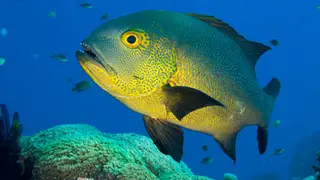
The transparency of water and air means they are invisible to us; we perceive only the interfaces where they meet, such as the surface of a pond. Light reflection and refraction at these boundaries create visible effects like Snell's window, which compresses the world above water into a circular view for fish. Even underwater, we don't see the water itself, but rather the objects and particles within it.
The visibility of any transparent medium hinges on refractive index mismatches at its interfaces. When light crosses from water to air, its path bends and partially reflects, creating the shimmering surface we perceive. A perfectly still, perpendicular view eliminates this effect, rendering the boundary nearly invisible. Similarly, Snell’s window arises because light entering water from above is refracted into a cone; beyond a critical angle, total internal reflection turns the surface into a mirror, hiding the outside world from submerged observers.
Light absorption also shapes underwater perception. Water selectively removes longer wavelengths first, so reds vanish within meters, while blues penetrate deepest. This is why deep water appears blue and why suspended particles, not the water itself, scatter light to reduce visibility. Even in crystal-clear conditions, the medium remains unseen—only its contents and edges are perceptible.
This explanation could shift public understanding of everyday perception, fostering curiosity about optics and physics. Anglers, divers, and photographers may apply these principles practically, such as positioning to avoid Snell’s window or anticipating color loss at depth. Educators might use the phenomenon to illustrate refraction and total internal reflection, potentially increasing science engagement. However, its impact is likely limited to those already interested in natural phenomena, offering a satisfying answer to a common question rather than driving broad societal change.