Arctic's never-freezing sea corridor faces climate upheaval; Inuit and researchers mount urgent study
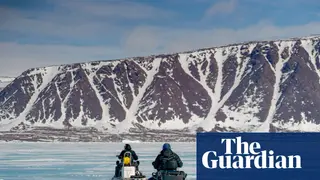
In Canada's far north, a researcher and local Inuit are gathering ocean data from under the sea ice to track changes in a vast polynya that remains ice-free year-round. This area, larger than Austria, supports a rich marine ecosystem but is being altered by global heating. A coalition of scientists and Inuit communities is pushing for a protected area to study and safeguard it before it transforms beyond recognition.
The North Water polynya spans roughly 85,000 square kilometres between Canada and Greenland, a zone larger than Austria that remains open year-round despite its extreme latitude. Its persistent open water attracts migrating whales, seals, walruses, polar bears, and millions of seabirds, while summer algae blooms anchor a food web stretching from microscopic life to top predators. Local Inuit in Grise Fiord, a hamlet of 144 people, are partnering with university researchers to deploy submersible instruments through holes drilled in sea ice, transmitting oceanographic readings southward for analysis.
Canada designated its half of the region as the Sarvarjuaq marine protected area in March, following a 2017 commission recommendation for joint Inuit-managed conservation. Greenland, however, has yet to match that commitment, leaving the transboundary ecosystem only partially shielded as warming waters and shifting seasonal patterns alter its character.
This story could reshape how Arctic conservation is governed, potentially establishing a model where Indigenous communities lead scientific monitoring and management of critical marine habitats. If successful, the protected-area proposal may influence policy across the circumpolar north, affecting fishing, shipping, and resource extraction interests. The outcome could also carry symbolic weight for Inuit self-determination, demonstrating whether traditional knowledge and modern research can jointly safeguard ecosystems under climate stress.