Live heritage science: public invited to watch analysis of historic More family portrait
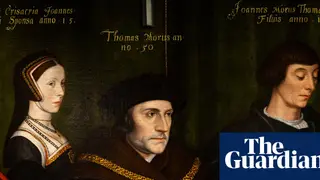
A major painting depicting Thomas More and his family will undergo non-invasive scientific examination in full view of visitors at Nostell in West Yorkshire. The eight-day project marks the first public macro X-ray fluorescence scanning of its kind in the UK, using techniques similar to those employed during the Rijksmuseum's restoration of Rembrandt's Night Watch. Curators aim to make heritage research transparent and accessible, revealing hidden details of the artwork's creation and condition.
The painting measures 2.5 by 3.4 metres, a scale that kept it crated for most of the 18th century since it could not fit through doorways. It depicts three generations of the More family in their Chelsea home, surrounded by books, musical instruments, pets, and symbolic details—a tethered monkey near Alice More has been interpreted as representing household discipline.
Holbein's original was destroyed in a 1752 fire, though a preparatory sketch survives in Basel. Five copies are known today, including one at the National Portrait Gallery and a miniature at the V&A. Art historian Roy Strong has called the work "arguably the greatest and most innovative" of Holbein's English period, and it is considered the first domestic family portrait in British art history.
This public-facing science project could reshape how audiences engage with heritage conservation, making normally invisible research processes tangible and accessible. By inviting visitors to witness macro X-ray fluorescence scanning firsthand, the National Trust may foster greater public appreciation for the technical complexity behind art preservation. It could also encourage other institutions to adopt transparent, open-lab approaches, potentially broadening cultural participation and deepening connections between communities and the artworks they collectively own.