Deep-Mine Xenon Tank Captures Anomalous Nuclear Recoil Hinting at Dark Matter
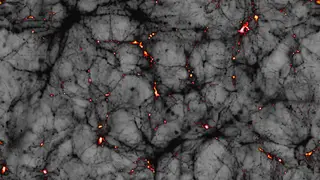
An experiment in a former gold mine in South Dakota detected an unusual energy signature from a xenon nucleus recoiling, which researchers cannot yet explain. The event matches predictions for weakly interacting massive particles (WIMPs), a leading dark matter candidate. While the detection is small, it represents the strongest physical evidence for dark matter so far.
The detection occurred during a 220-day observation window at the Sanford Underground Research Facility, housed in a former South Dakota gold mine. The lone event involved a xenon nucleus recoiling after an energy transfer, matching predictions for WIMPs—particles theorized to have mass but interact only weakly with ordinary matter. Researchers calculated that, under their models, such a particle would be roughly 200 times heavier than a proton. The findings were shared as a preprint and presented at the 2026 TeV Particle Astrophysics Conference in Japan, though they have not yet undergone peer review.
This experiment builds on decades of indirect dark matter evidence, primarily gravitational effects on galaxy formation. Unlike prior astronomical observations, this would represent a direct physical interaction with a candidate particle. The team emphasizes caution, noting that a single event is statistically insufficient for a discovery claim, but it offers a rare, concrete target for future detectors and theoretical refinement.
If confirmed, this could reshape fundamental physics, offering the first direct handle on what constitutes most of the universe's matter. Society may see accelerated funding for particle detectors and space-based observatories, while science education could shift toward explaining dark matter as a tangible, testable phenomenon. However, the single event may also spur skepticism about reproducibility, potentially slowing public trust in high-cost physics projects until corroborated.