DJI's Romo 2 robovac gains privacy mode and smarter obstacle handling
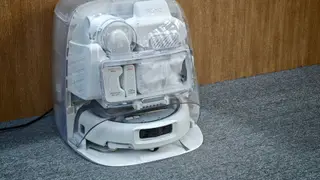
DJI introduced the second-generation Romo robovac lineup, featuring quieter operation, stronger suction, and the ability to climb steps up to 4 centimeters. The new models also include a local-only data mode designed to address security concerns from the original Romo. Improved navigation uses AI-like reasoning to avoid cables, transparent objects, and adapt to unfamiliar obstacles.
The Romo 2 lineup splits into two distinct models: a transparent P2 and an opaque A2, both sharing the upgraded hardware. Navigation improvements allow detection of obstacles as small as 2mm, including cables and reflective surfaces like mirrors, while a feature described as "human-like reasoning" lets the vacuum apply knowledge from previously encountered objects to unfamiliar ones. Physical design changes include two legs enabling traversal of single steps up to 4cm or paired steps roughly twice that height, useful for thresholds between rooms.
Performance upgrades include 36,000Pa suction on carpet, extended brush and mop arms for reaching under furniture, and an 85 percent noise reduction. The Local Data Mode, arriving via update in Q4, cuts the app's internet connection, blocks photo and camera feed syncing, and permits full camera and microphone shutdown with data deletion. DJI plans to extend this mode to original Romo owners. No pricing or release date has been announced, and US availability appears blocked by federal restrictions and the FCC's ban on foreign-made robot vacuums.
This launch could reshape consumer trust in connected home devices, particularly for privacy-conscious buyers who avoided the original Romo after its security failures. The local-only data mode may pressure competitors to adopt similar offline capabilities, potentially normalizing privacy features as a standard selling point rather than an afterthought. However, the US market exclusion means many affected consumers won't have direct access, possibly limiting broader industry influence. The step-climbing and quieter operation could also shift expectations for robovac capability, though adoption will depend on pricing and regional availability.