Early black holes may have formed from dark matter before stars, new model suggests
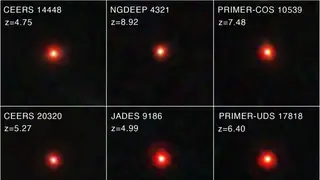
A new proposal suggests that black holes in the early universe could have formed inside dense clumps of dark matter, with the cosmic microwave background preventing smaller collapses. This would explain the unexpectedly high number of ancient black holes seen by the James Webb Space Telescope without altering standard cosmology. The researchers, from NYU and Tufts, call these objects 'not-quite-primordial' black holes.
The proposal hinges on dense dark-matter clumps in the early universe, where gravity could pull gas inward to form black holes before stars ignited. The hot cosmic microwave background would suppress smaller collapses, allowing only massive black holes to emerge. This avoids the need for exotic physics required by traditional primordial black hole theories, which struggle to match observed CMB ripples. The researchers call these objects “not-quite-primordial” and plan to simulate their light signatures for comparison with JWST data. Future missions like PIXIE could test the idea by measuring CMB spectral distortions.
This model could reshape how astronomers interpret JWST’s surprising abundance of ancient black holes, potentially easing tensions with standard cosmology. If confirmed, it may refine our understanding of dark matter’s role in galaxy formation and black hole seeding. Society benefits from clearer cosmic history, though direct practical impacts remain distant. The proposal also highlights how theoretical physics adapts to unexpected observations, fostering public interest in space science and the value of next-generation telescopes.