EV Battery Health Study Finds Minimal Capacity Loss Over 150,000 km
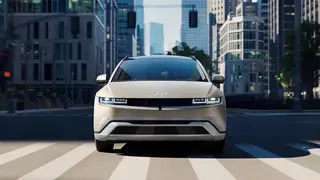
Aviloo conducted over 500,000 battery health tests on 20 popular EV models across five continents. Most vehicles retained about 95% of original capacity after 50,000 km and low 90s after 150,000 km. Standout performers include the Hyundai IONIQ 5 and Kona.
The Aviloo study drew on more than half a million individual battery health assessments conducted between 2022 and 2026, covering 20 widely sold electric models across North America, South America, Europe, Asia, and Australia. Across that broad sample, the typical vehicle retained roughly 95 percent of its original capacity at the 50,000-kilometer mark, with most models settling into the low 90s by 150,000 kilometers. A minority of tested vehicles showed steeper losses approaching 20 percent, though the article notes that even such declines leave modern EVs with substantial usable range.
Seven models emerged as clear standouts for durability: the Hyundai IONIQ 5 and Kona EV, Mercedes-Benz EQA, BMW i4, Volvo XC40 Recharge, Polestar 2, and Ford Mustang Mach-E. The author emphasizes that battery longevity concerns are largely overstated, pointing to older EVs like a 2019 Tesla Model 3 and 2018 BMW i3 that still function well on weekly home charging, and noting that today's vehicles offer three to four times the range of a decade ago.
This study could meaningfully ease consumer anxiety about EV battery replacement costs, which remain a top barrier to adoption. Prospective buyers may feel more confident purchasing used electric vehicles