Google DeepMind's WeatherNext 3 sharpens forecasts with real-time satellite feeds
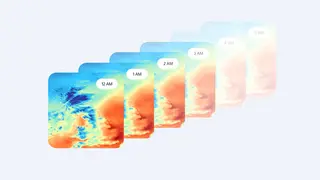
WeatherNext 3, the latest AI weather model from Google DeepMind, delivers forecasts on a 5-kilometer grid, a fivefold improvement over its predecessor. It incorporates live satellite and weather station data, boosting precipitation prediction accuracy by up to 50 percent. The model will power Google Search, Gemini, Maps, and other services, and the original WeatherNext is now open-source.
The model's shift from numerical weather prediction data to live satellite feeds eliminates a six-hour lag that hampered earlier versions. This continuous atmospheric view, combined with sparse weather station data, allows the system to capture fine-grained humidity variations that change dramatically across short distances.
DeepMind positions the model as particularly valuable for renewable energy operators. Its turbine-height wind speed forecasts and solar radiation data could help wind and solar farms optimize output. The open-sourcing of the original WeatherNext in August 2026 also enables independent developers to build custom forecasting tools.
WeatherNext 3 could significantly improve how individuals and industries prepare for weather events. More accurate precipitation forecasts may reduce disruption from storms, while renewable energy companies could better plan generation. However, reliance on a single tech company's proprietary model raises questions about access equity, particularly for regions with limited infrastructure. The open-sourcing of the original model may help mitigate this, though the advanced version remains commercially controlled.