U.S. Aims for 1,000 Launches a Year, Sparking Spaceport Expansion Debate
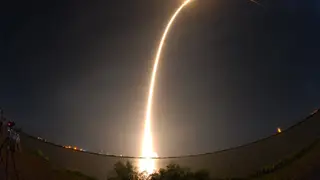
A new National Space Transportation Policy calls for more than 1,000 U.S. rocket launches annually by 2030, a fivefold increase over 2025's 181 launches. The surge is driven by commercial satellite demand and potential orbital data centers for AI. SpaceX's $100-billion spaceport in Louisiana is part of this push.
The updated directive marks a dramatic acceleration from the 2013 baseline, when U.S. launches were roughly a tenth of last year's total. This surge is fueled by commercial satellite constellations, military orbital servicing needs, and a growing push to place AI data centers in space to avoid terrestrial opposition.
SpaceX's new Gulf Coast facility addresses a specific logistical gap: reaching polar orbits without overflying dense urban areas, which limits operations at its Texas and Florida sites. California's Vandenberg is too populated for frequent heavy launches, and Alaska's remote complex is hampered by harsh winters. Analysts note existing spaceport infrastructure is struggling to match these evolving demands.
The push for a fivefold increase in launches could bring significant economic investment to coastal regions like Louisiana, yet it may also impose noise, safety, and environmental burdens on nearby communities. Accelerated orbital infrastructure could expand global connectivity and AI processing capabilities, potentially reshaping digital services. However, rapid expansion may outpace regulatory frameworks, raising questions about space traffic management and long-term orbital sustainability.