Inbolt CEO to argue that physical AI's real hurdle is integration, not data
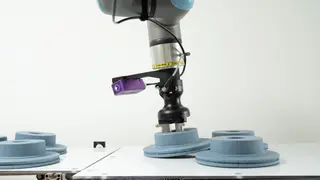
Inbolt CEO Rudy Cohen will speak at RoboBusiness, arguing that physical AI's main challenge is deployment rather than data. He will draw on his company's experience across over 100 factories and 40 million robot cycles to highlight the importance of closing the perception-motion loop. Cohen will use production data from automakers like Stellantis, Toyota, and Ford to demonstrate that physical AI is already commercially viable.
Cohen's presentation is scheduled for the first afternoon of the RoboBusiness conference in Santa Clara. Inbolt, established in 2019, has secured roughly $23 million in funding and now operates across more than one hundred facilities in Europe, the United States, and Japan.
The company's system allows robots to pick up components in unconstrained orientations, then uses in-hand localization to adjust trajectories during movement. Cohen's academic background spans applied mathematics research and an entrepreneurship master's degree, and his argument centers on the value of high-frequency servo control over larger model architectures.
If integration is the primary hurdle, reducing deployment costs could accelerate automation in mid-sized manufacturing, potentially shifting workforce needs toward system supervision and maintenance. Consumers may benefit from more resilient supply chains and stable pricing. Yet, reliance on proprietary control loops might concentrate influence among established vendors, possibly hindering interoperability and raising entry barriers for smaller robotics firms.