Private Satellites and AI Transform Earth Monitoring, Raising Privacy and Security Concerns
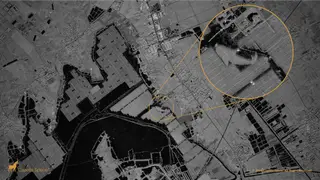
An OECD report highlights how advances in optical systems, cloud computing, and AI have democratized access to satellite Earth-observation data. While these technologies offer benefits for disaster response and environmental monitoring, they also introduce risks to national security and personal privacy.
The OECD report, authored by Marit Undseth and Claire Jolly, emphasizes that advances in photonics, cloud computing, and AI have made high-quality satellite data widely accessible. This democratization creates a dual-use dilemma, where the same orbital assets can monitor environmental issues or track military movements.
The report also warns that the proliferation of this data, combined with digital disinformation trends, could lead to fake or misrepresented imagery that undermines public trust. The article features commentary from Space42's Viktor Stoyanov, and notes that government programs like Landsat were once the sole providers of such observations.
The expanding availability of high-resolution Earth observation could reshape how governments, corporations, and individuals interact with spatial data. While disaster response and environmental monitoring may benefit greatly, the same capabilities could enable intrusive surveillance or targeted misinformation. Public trust in satellite imagery may become a critical issue, as distinguishing authentic data from manipulated content grows harder. This shift could affect national security protocols and personal privacy expectations, requiring new norms for ethical data usage.