Affordable Power Could Address Multiple European Economic Challenges
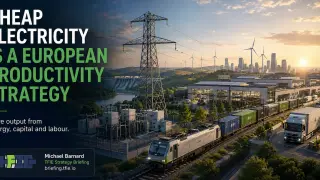
While cheap electricity alone won't fix Europe's productivity issues, it can boost energy efficiency and support automation. China's experience during the Hormuz crisis shows that electrified transport provides resilience. Europe's 2022 gas shock left a lasting economic dent, highlighting the need for clean power.
During the Hormuz crisis, China's second-quarter oil demand dropped sharply, yet transport activity continued to expand. This resilience stemmed from its substantial electric vehicle and truck fleet, which offered an alternative to petroleum dependence.
Conversely, Europe's 2022 energy crisis had lasting effects. An IMF analysis projects the region's potential output will remain roughly 0.8% lower by 2027, as firms shifted focus to energy efficiency, sacrificing broader productivity gains. A prior 2021 price spike had already hinted at the risks of assuming cheap gas was permanent.
The shift toward affordable clean power could reshape European industrial competitiveness and household energy budgets. Manufacturers may gain a cost advantage that supports automation, addressing labor scarcity. Consumers could see more stable utility bills, insulated from volatile fossil-fuel markets. However, the capital-intensive nature of this transition might initially burden taxpayers or raise electricity tariffs for some, even as long-term resilience improves. The benefits likely hinge on policy execution and grid investment.