New Simulations Suggest Moon Formed Rapidly After Earth Collision
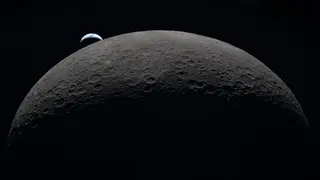
Researchers have run detailed simulations of the giant impact that likely created the Moon, incorporating the effects of internal heat on material strength. The results indicate that the Moon could have formed within hours, much faster than previous models suggested. The study highlights the importance of considering the thermal state of early protoplanets in collision scenarios.
The new modeling incorporates how heat within the young impacting body altered its physical malleability. Since warmer material yields more readily, the collision's momentum transfer and resulting spray of ejected matter differed significantly from prior assumptions that treated the worlds as rigid.
Earlier studies established the broad collision framework, and a 2022 effort first suggested a quick assembly. This latest work strengthens that rapid scenario, indicating the lunar body gathered from the surrounding cloud of fragments in roughly five hours, rather than slowly accumulating over an extended period.
This refined timeline could reshape how planetary scientists teach Earth's early history, offering a more precise narrative of our planet's formation. It may also influence models of exoplanetary collisions, potentially guiding astronomers in assessing how moons form around distant worlds. For the public, a clearer origin story could deepen engagement with space science, though the immediate practical effects remain confined to academic research and educational materials.