Endeavour's STS-69 Mission Marked NASA's 100th Crewed Spaceflight
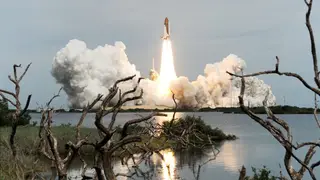
On September 7, 1995, space shuttle Endeavour lifted off on STS-69, becoming NASA's 100th crewed space mission. The 11-day flight deployed and retrieved two separate payloads, including the Spartan 201 satellite and the Wake Shield Facility. Astronauts also performed a spacewalk to practice techniques for building the International Space Station.
The milestone flight carried a five-person crew under Commander David Walker. Alongside pilot Kenneth Cockrell and payload commander Jim Voss, mission specialists Jim Newman and Michael Gernhardt executed a complex orbital itinerary.
Notably, the mission achieved a unique first by deploying and recovering two distinct science packages. The Spartan 201 examined solar wind generation, while the Wake Shield Facility fabricated thin films in a vacuum and conducted an Air Force electrical experiment. A lengthy spacewalk also tested upgraded spacesuits and assembly methods for the future station.
The achievement of a hundred crewed launches may have signaled a maturation of human spaceflight, moving beyond experimental firsts into routine operational capability. This milestone could have inspired public confidence in NASA's reliability, potentially encouraging sustained funding and public interest. The dual-payload operations and EVA techniques developed here may have directly influenced the assembly methods later used for the International Space Station, shaping the collaborative framework of modern orbital research that benefits scientists and engineers globally.