XPENG Details Its Physical AI Approach at IFA Berlin
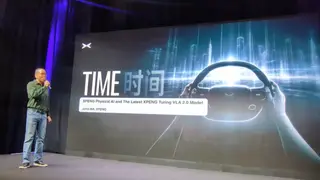
At IFA Berlin, XPENG's John Ma discussed the company's physical AI technology, highlighting constraints like low latency and safety. The new VLA 2.0 model incorporates temporal context and predictive capabilities to improve response times. These features are already deployed in vehicles in China, including robotaxis.
XPENG's physical AI system operates under strict onboard power and energy limits, prioritizing rapid response and safety. The VLA 2.0 model uses a 30-second memory window, a streaming inference mechanism that boosts reaction speed by 300%, and a six-second forward prediction feature to select optimal driving paths.
The technology currently runs on three proprietary Turing chips in newer models, with a fourth added for redundancy in Guangzhou robotaxis. A "distilled" version is being developed for single-chip and older dual-Orin setups, though safety guarantees remain paramount during these trials.
XPENG's focus on low-energy onboard processing could influence the environmental footprint of autonomous transport. If these efficient models scale across Europe, they may reduce the per-vehicle energy draw, potentially aiding urban climate targets. However, increased autonomy might encourage more driving, offsetting efficiency gains. Regulators and consumers could see safety and compliance as gatekeepers for these climate-adjacent benefits.