AI-assisted mathematicians make strides on Navier-Stokes equations
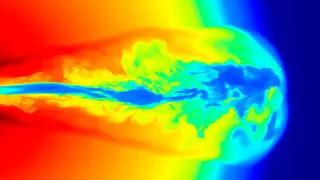
Two mathematicians, with substantial help from AI, have achieved three key results related to the Navier-Stokes equations, a long-standing unsolved problem. Their findings, which involve the Boussinesq approximation and Euler equations, could potentially earn them a $1 million Millennium Prize. The work underscores the growing role of large language models in advancing mathematical research.
The research extends prior work by Diego Córdoba and Luis Martínez-Zoroa, concentrating on the Boussinesq approximation and Euler equations. Two of the three results have been formally verified using Lean, a system that translates mathematical proofs into computer-checkable code to eliminate logical errors.
While the findings do not yet fully resolve the original Navier-Stokes problem, they demonstrate that spontaneous turbulence or "blow-ups" can occur in related fluid models. Experts like Terence Tao suggest the methodology could be extended to the full equations, potentially securing the $1 million prize for the team.
The integration of large language models into rigorous mathematical proof could accelerate progress across numerous scientific fields. If this approach leads to a definitive Navier-Stokes solution, it may enhance the reliability of fluid dynamics simulations used in engineering, meteorology, and medicine. However, the reliance on AI assistance also raises questions about the nature of mathematical authorship and verification, potentially reshaping how future breakthroughs are credited and validated.