Ancient North American Cat Was a Fish-Eating Puma Cousin
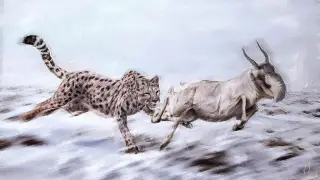
New analysis of fossils and DNA shows that Miracinonyx trumani, long called the American cheetah, was actually a close relative of the puma. Northern populations in the Yukon appear to have eaten fish, including salmon, while southern cats hunted on land. The species also had a much wider range than previously thought, extending about 20 degrees farther north.
The study, published in *Current Biology*, used ancient DNA and isotope analysis to show that *M. trumani* split from the puma lineage about 2.6 million years ago. Its cheetah-like build is now viewed as convergent evolution, casting doubt on the idea that pronghorn speed evolved solely as a defense against this predator.
Yukon fossils, aged 23,000 to 31,000 years, reveal genetic tweaks to circadian rhythms, likely aiding survival in extreme Arctic daylight. These northern cats appear to have fed on migratory fish like salmon, whereas southern populations hunted land prey, demonstrating a broad ecological range.
This finding could reshape paleoecological models of Pleistocene North America, prompting researchers to reconsider how extinct predators adapted to varied climates. For the public, it may refine the narrative of the American pronghorn's speed, shifting it from a direct cheetah arms race to a broader evolutionary pressure. Museums and educators might update exhibits, while future studies could explore how similar genetic adaptations influenced other Arctic species.