Vision AI emerges as critical safety layer for construction automation
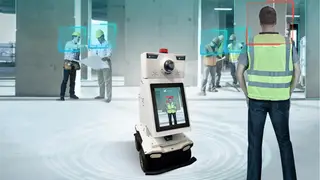
As construction sites adopt autonomous equipment, vision AI provides the continuous perception needed to keep workers and machines safe. The technology addresses hazards like struck-by incidents, which account for many construction deaths. According to Grand View Research, the construction robotics market is projected to reach $3.66 billion by 2030.
The construction robotics sector is projected to hit $3.66 billion by 2030. Struck-by incidents, a major portion of OSHA's "Fatal Four," claim over 100 U.S. workers annually, often involving moving equipment. New safety protocols, such as ANSI/RIA R15.08, are evolving to address autonomous mobile robots in dynamic, changing environments, moving past older fixed-path guidelines.
While individual machines use onboard sensors for local navigation, vision AI provides a broader, site-wide awareness by synthesizing feeds from existing cameras, drones, and wearable devices. This approach is spawning dedicated hardware, like viAct's viBOT, an autonomous monitoring unit designed to observe and interpret site interactions in real time.
The integration of vision AI could significantly reduce construction fatalities by providing an always-on safety net that human supervisors cannot match. For frontline workers, this may mean fewer struck-by accidents, though it could also introduce new monitoring dynamics on site. Robotics firms and contractors may face higher upfront costs and complex liability questions, while regulators could need to adapt standards further to ensure equitable deployment across smaller firms.