Meta's new AI assistant seeks deep access to personal data
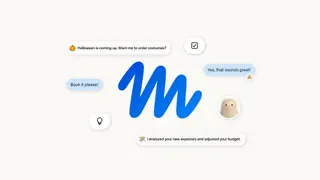
Meta unveiled Muse, a personal AI agent that connects to users' email, calendars, payments, and other services to handle tasks like booking travel and making purchases. The agent is opt-in per service and will be free initially, with paid plans at $20 and $100 per month. The launch comes shortly after Meta's $18 billion settlement over social media harms, highlighting the trust challenge of granting an AI such broad access.
Muse operates across web, mobile, and WhatsApp, and can connect to services via built-in connectors, public APIs, or browser automation. It learns from conversations to make unprompted suggestions and runs in the background. A usage meter tracks free-tier limits before prompting subscriptions.
The launch places Meta in the agentic AI race alongside rivals like Gemini Spark and Claude Cowork. However, granting such broad access raises privacy concerns, as seen with other assistants requiring extensive licenses. Meta's recent $18 billion settlement over social media harms amplifies the trust challenge.
Consumers could gain significant convenience but may face heightened privacy risks if they grant Muse access to sensitive accounts. Meta may leverage this to rebuild trust after its recent settlement, or it could face renewed scrutiny over data handling. The broader AI industry may see a normalization of deep personal data access, potentially reshaping user expectations around digital assistants.