Chinese geologists find quartz deposit matching US high-purity standard
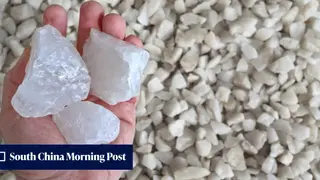
Researchers have discovered a high-purity quartz deposit in Hubei province with properties similar to the Spruce Pine mine in North Carolina. The deposit could reduce China's reliance on imported quartz for solar panels and semiconductors. The findings were published in the peer-reviewed journal Earth Science.
The identified Xiaohuaguo site, located near Shiyan in Hubei, is a hydrothermal vein-type deposit. Its purified quartz sand exhibits characteristics—such as grain size and fluid inclusions—that closely match the IOTA-CG grade produced by Unimin at Spruce Pine. Silica purity exceeds 99.9%.
The exploration was a joint effort by geologists from the China University of Geosciences, the Wuhan Centre of the China Geological Survey, and the Hubei Geological Bureau. Their findings appeared in the Chinese-language journal *Earth Science* last month, amid US discussions about leveraging quartz supplies in response to China's rare earth export restrictions.
This discovery may lessen China's dependence on imported high-purity quartz, potentially altering supply chains for solar and semiconductor manufacturing. If the deposit proves commercially viable, it could shift leverage in ongoing trade tensions, as both nations possess critical mineral resources. Manufacturers and consumers could see more stable pricing, while policymakers might reassess strategic mineral dependencies.