From Hurricane Maria to the Green New Deal: How grassroots activism shaped US climate policy
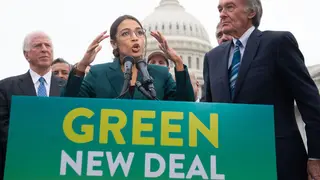
The excerpt from Leah Stokes' book recounts how Alexandria Ocasio-Cortez's experiences with Hurricane Maria and the Standing Rock protests influenced her decision to run for Congress. It highlights how these personal encounters with climate impacts and fossil fuel opposition led her to champion the Green New Deal as a central platform. The narrative illustrates the connection between grassroots movements and the emergence of major climate policy proposals in US politics.
Ocasio-Cortez's 2016 visit to Standing Rock exposed her to the fossil fuel industry's effects on Indigenous communities, and she was recruited to run for Congress shortly after. Her successful 2018 primary campaign in the Bronx proposed a Green New Deal scaled to WWII or the Marshall Plan.
The IPCC's 2018 report warned that limiting warming to 1.5°C required halving emissions by 2030, creating urgency. Following Democratic midterm wins, the Sunrise Movement occupied Speaker-designate Nancy Pelosi's office, using the report's timeline to demand immediate action.
This narrative could reshape public understanding of how grassroots activism and personal tragedy translate into national policy agendas. By linking specific events like Hurricane Maria and Standing Rock to the Green New Deal, it may encourage voters to see climate policy as a direct response to lived experiences. Furthermore, the IPCC's role in triggering protests could influence how future scientific findings are used to mobilize political pressure, potentially accelerating or complicating legislative timelines.