Nickel Oxide Surface Structure Revealed as Key Driver of Methane Conversion
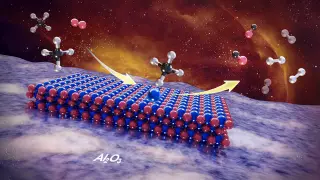
Scientists discovered that a specific atomic arrangement formed on nickel oxide during methane partial oxidation is more active than metallic nickel. This finding allowed a catalyst with only 0.8% nickel to achieve performance comparable to one with ten times more metal. The work highlights the importance of observing catalysts under reaction conditions.
The research, published in *Nature Catalysis*, brought together scientists from the Dalian Institute of Chemical Physics, Xi'an Jiaotong University, and Cardiff University. Using a microemulsion preparation method, they crafted a nickel-alumina catalyst with just 0.8% nickel, which converted 92% of methane while maintaining a stable hydrogen-to-carbon monoxide ratio near 2.0.
Notably, metallic nickel rapidly oxidized into nickel oxide during the reaction, but pure nickel oxide alone only promoted complete combustion. Instead, a reconstructed atomic motif designated [Ni1O4Ni4] emerged on the surface, which theoretical calculations showed dramatically lowers the energy barrier for breaking methane's carbon-hydrogen bonds.
This finding could substantially lower the material costs for producing syngas, a critical feedstock for fuels and chemicals, by enabling industrial catalysts to use a fraction of the nickel currently required. If the active structure can be reliably engineered, chemical manufacturers may achieve comparable output with reduced metal expenses, potentially influencing downstream product pricing. The emphasis on observing catalysts under realistic operating conditions may also encourage more accurate design methodologies across other industrial chemical processes.