Low-Energy X-Ray Sources Discovered in Overlooked Chandra Data
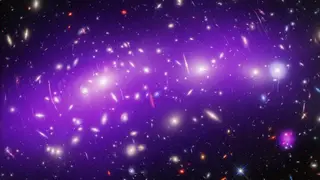
Researchers reexamined low-energy X-ray data from NASA's Chandra observatory and found signatures of previously unnoticed celestial objects. These sources emit radiation that is weaker than typical stars, which had caused them to be dismissed as noise. The discovery, published in Nature Astronomy, may shed light on galaxy evolution and the life cycles of galaxies.
The team examined Chandra observations spanning 1999 to 2017, meticulously removing background noise and instrumental artifacts to isolate the faint signals. Their findings, published in Nature Astronomy, highlight how low-energy X-ray channels were routinely disregarded as unimportant in prior analyses.
These "hypersoft" sources are likely stellar remnants—black holes, neutron stars, or white dwarfs—accreting gas from companion stars. Because they probably also emit extreme ultraviolet light, which interstellar hydrogen largely absorbs, most such objects may remain permanently invisible from Earth, despite potentially being abundant across galaxies.
This finding could significantly alter astrophysical models of galaxy evolution, as the sheer number of hidden sources may influence energy budgets within galaxies. It may also encourage researchers to mine existing archives for similar overlooked signals, potentially yielding new discoveries without requiring new missions. For the public, it highlights the value of revisiting established data, possibly fostering greater support for long-term observational projects. Future telescope designs might also prioritize low-energy X-ray and EUV sensitivity to uncover these elusive objects.